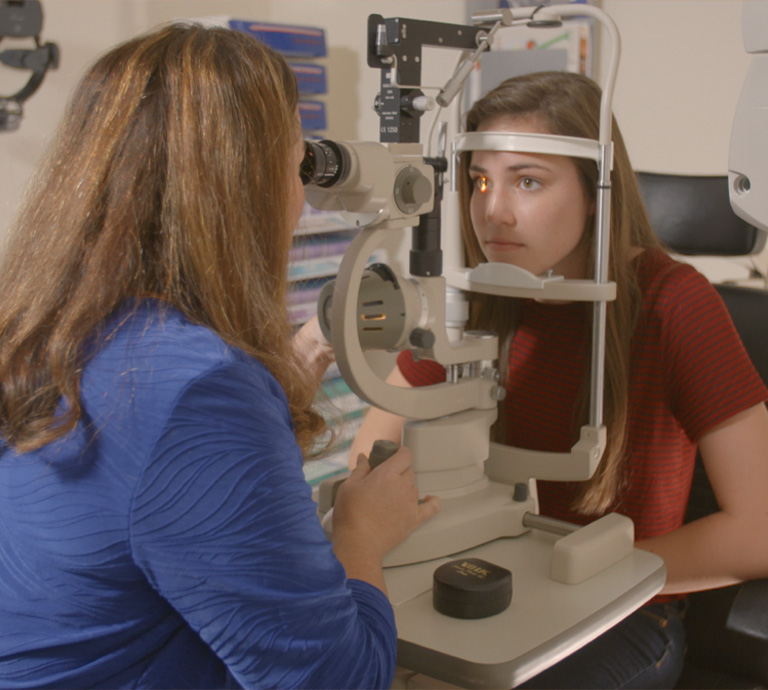
Preserving Comfortable, Healthy Sight
Eye care is more than assessing your eyeglass or contact lens prescription. We evaluate eye health to check that your vision is comfortable and functioning healthily. Diagnosing and managing eye problems is crucial to our mission: providing patients with effective, personalized eye care through every stage of life.
We can also diagnose conditions with ocular symptoms, like diabetes, autoimmune disorders, high blood pressure, and vascular disease. We can see a lot with comprehensive eye care, and we aim to use all the knowledge, experience, and technology at our disposal to serve you and your family.
Book regular eye exams at Urban Optique & Eyecare so we can keep an eye on your needs.
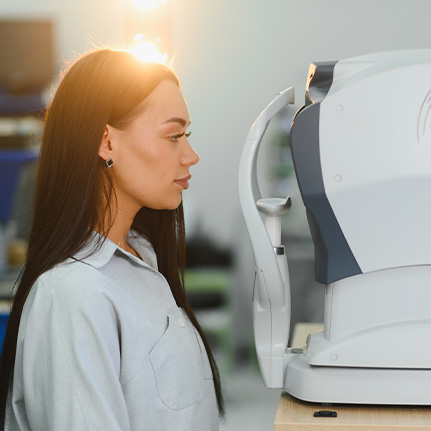
Diagnosing Eye Health
Your vision involves a complex system, including your eyes and your brain. Every part is essential for healthy, comfortable vision. When you visit us for a comprehensive eye exam, we look at the overall health and functionality of your eyes and vision.
Diagnostic technology helps us evaluate your current eye health and predict changes. We use what we learn about your vision and eye health to personalize your care, from assessing risks to determining treatment plans.
Visiting us routinely gives us more information about how your eyes change over time, so we can monitor even the smallest of concerns.
Common Eye Diseases and Conditions
There are many eye diseases and conditions we can diagnose and help manage, from common conditions to rarer ones. Some eye problems are preventable or treatable, while others have symptoms we can help alleviate or improve. Early detection offers patients the best chance of safeguarding their sight in all cases.
We use specialty eye care technology to monitor, diagnose, and determine management plans for various eye conditions and diseases, including cataracts, glaucoma, macular degeneration, keratoconus, and more.
Our goal is to educate our patients, so they can make informed decisions about their eye care. Sharing information about common eye diseases and conditions is one small part of helping our patients learn about their vision.
A cataract is a cloudy or opaque spot on the eye’s clear lens, which sits behind the iris and pupil and helps to focus light. When proteins in the lens break down, they clump together, forming a cataract and reducing the lens’s flexibility. As a result, people with cataracts experience gradually decreasing vision at all distances.
Many people develop cataracts after the age of 55, as the lens can become more rigid, resulting from natural aging. However, lifestyle factors and health conditions can contribute to development, including smoking, excessive alcohol consumption, and UV exposure.
Glaucoma causes progressive damage to the optic nerve. Located at the back of the eye, the optic nerve is a bundle of over one million nerve fibers that send visual information to the brain. Over time, glaucoma leads to significant optic nerve damage, resulting in blindness.
There are many forms of glaucoma, but the most common in the US is open-angle glaucoma. This type causes excess fluid in the eye to increase pressure on the optic nerve, slowly causing the nerve fibers to deteriorate.
Open-angle glaucoma develops slowly, so many people don’t notice any symptoms until significant damage occurs. Peripheral (side) vision is usually the first part of sight impacted. Unfortunately, optic nerve damage cannot be reversed. However, early detection can help prevent further damage.
Macular degeneration is an eye disease affecting the macula, which helps us see central vision, fine details, and color. Macula deterioration causes distorted lines or details, dim color vision, and a blank or dark spot in central vision.
There are 2 forms of the disease:
- Dry (atrophic) is the most common form. Macula tissue thins, preventing the macula from working effectively. There is no cure, but diet and nutrition can help prevent progression.
- Wet (exudative) is rarer but can develop rapidly with severe symptoms. It’s caused by abnormal or weakened blood vessels that leak fluid into the macula and blur central vision. When detected early, treatment can seal or remove leaky blood vessels.
The disease is commonly referred to as age-related macular degeneration because it’s more common in adults over 55. However, other risk factors can contribute to the disease’s development, including poor nutrition, lack of exercise, smoking, and UV light exposure.
Complications from uncontrolled blood sugar due to diabetes can result in eye diseases, including diabetic retinopathy and diabetic macular edema. Diabetic retinopathy occurs when the blood vessels in the eye are damaged from elevated blood sugar levels. This can cause breakage, leaking fluid, and abnormal blood vessel growth.
Diabetic retinopathy typically has no symptoms during the early stages. As it progresses, it can cause blurred or hazy vision, difficulty seeing at night, and an increase in floaters or spots. If left untreated, diabetic retinopathy can progress to diabetic macular edema (DME).
DME is the swelling of the macula, which is responsible for central vision, fine details, and color vision. When macula function is impaired, it can cause blurred or wavy central vision, faded or washed-out colors, and eventually central vision loss leading to blindness.
Retinal detachment occurs when the retina tears or detaches from the back of the eye. The retina is a thin, light-detecting tissue essential for capturing images. Unfortunately, the retina is delicate and can weaken or dislodge because of disease or injury.
One cause is high myopia (nearsightedness), which is caused by eye growth. As the eye elongates, it stretches and weakens the retina. Managing myopia can help slow eye growth in children to reduce the risk of retinal detachment.
When the retina pulls from the back of the eye, some patients see a dark shadow or curtain fall over their eyes. Other symptoms can include increased floaters & spots, seeing flashes of light, or sudden vision loss.
Retinal reattachment surgery is successful for 90% of patients. Seeing an optometrist for an evaluation and treatment as soon as possible can help save your sight.
Keratoconus is a vision disorder occurring when the normally dome-shaped cornea (clear front of the eye) thins and bulges. The irregular shape affects how light enters the eye, resulting in distorted vision.
People are more likely to develop keratoconus if a close relative suffers from the disorder. Another risk factor is frequent, aggressive eye rubbing.
In the early stages, glasses or contact lenses can help improve vision. However, patients may need customized specialty lenses, as standard contact lenses may be incompatible with the irregular cornea. In certain cases, corneal cross-linking surgery may be recommended to help strengthen the cornea and slow progression.
Dry eye is a common, chronic eye problem caused by poor tear production. The tear film is essential for moistening and nourishing the eye’s surface. The tear film has 3 layers: an oily outer layer, a watery middle layer, and an inner mucus layer.
Dry eye can be caused by insufficient tear production or by tears without the proper chemical composition, such as tears lacking the protective oily layer that are prone to evaporation.
People with dry eye can experience various uncomfortable symptoms, such as burning or stinging, blurry vision, light sensitivity, and redness or irritation. It can also increase the risk of repeat infections, leading to corneal scarring and impaired vision.
Conjunctivitis (pink eye) is the inflammation of the conjunctiva, the clear tissue that covers the eye and inner eyelids. This thin layer protects the eye from infection and debris. Tiny blood vessels in the conjunctiva expand when the tissue is irritated, making the eye appear pink or red.
Conjunctivitis can be infectious or noninfectious:
- Allergic and chemical conjunctivitis are noninfectious.
- Bacterial and viral conjunctivitis are highly contagious.
Treatment depends on the type and the eye’s reaction. For example, a person may have a mild reaction to allergies, easily treated with allergy medication. Or they may have a severe allergic reaction, increasing the risk of severe symptoms.
Optometrists can prescribe or recommend appropriate treatment after evaluating your eye health. Receiving treatment for pink eye can improve eye comfort and reduce the risk of complications.
Cataract Exams and Management
Cataracts are the leading cause of vision loss in the United States. While they can occur at any age, including at birth (called congenital cataracts), most cataracts develop in people over the age of 55.
There are a few preventative measures you can take to slow cataract development. Smoking, alcohol consumption, UV exposure, and poor diet can contribute to the development of cataracts. Wearing UV-blocking sunglasses, eating a diet rich in vitamins C, E, and carotenoids (found in fruits and vegetables), and reducing your alcohol consumption can support your eye health and reduce your risk of developing cataracts.
We check your eyes for signs of cataracts during comprehensive eye exams. If we diagnose you with cataracts, we will work together to form a management plan that may include customized eyewear, more frequent eye exams, and lifestyle changes to improve your eye health and slow cataract development.
If your vision becomes significantly impacted by cataracts, we can discuss cataract surgery options. This process includes assessing your eyes, providing a referral to a cataract surgeon, and monitoring you through the healing process post-procedure.
Stay Informed About Your Eyes
Routine comprehensive eye exams are crucial for detecting and managing eye diseases. We personalize your eye care based on your family history, current health conditions, and any diagnosed eye problems.
Our approach centers around preventive care, proactive monitoring, and patient education, so you know your risks and what you can do to help prevent eye problems.
Visit Urban Optique & Eyecare for eye exams and individualized care.
Our Featured Brands









Protect Your Child’s Vision from Myopia
Myopia, or nearsightedness, can progress rapidly during childhood, leading to a high prescription and significant eye health risks.
We provide myopia management to slow this progression, using methods such as Stellest eyeglass lenses, MiSight soft contact lenses, and Ortho-K Overnight Vision Correction.
Our Google Reviews
What Our Customers are Saying
My family switched to Urban Optique in 2025 and we are very happy that we did. Dr Simms is professional and caring. She takes her time with patients.
Michelle
I had a fantastic experience at Urban Eyecare! Huge thanks to Dr. Huynh for such a thorough exam and to Varshali for being so incredibly helpful throughout my visit. They both made the process seamless and enjoyable. Highly recommend this team!
Siddharth
I stopped by with a small issue with my glasses, and Emily was wonderful to deal with. She was patient, professional, and genuinely helpful. Left with my glasses fixed and a very positive impression.
Saurabh
Emmanuel
Visit Our Location
Find us in the Chandler Heights Marketplace, next to ToScany’s Coal Oven Pizza. There is plenty of parking available.
Our Address
- 4960 S. Gilbert Rd, Ste 11
- Chandler, AZ 85249
Contact Information
- Phone: 480-802-7170
- Fax: 480-802-3812
- Email: sheryl@drsimms.com
Hours of Operation
Closed from 1:30 to 2:00 pm on Monday, Tuesday, Thursday and Friday.


Our Practice
Eye Exams
Brands
Specialty Services
Urban Optique & Eyecare
- 4960 S. Gilbert Rd, Ste 11
- Chandler, AZ 85249
- Phone: 480-802-7170
- Fax: 480-802-3812
- Email: sheryl@drsimms.com